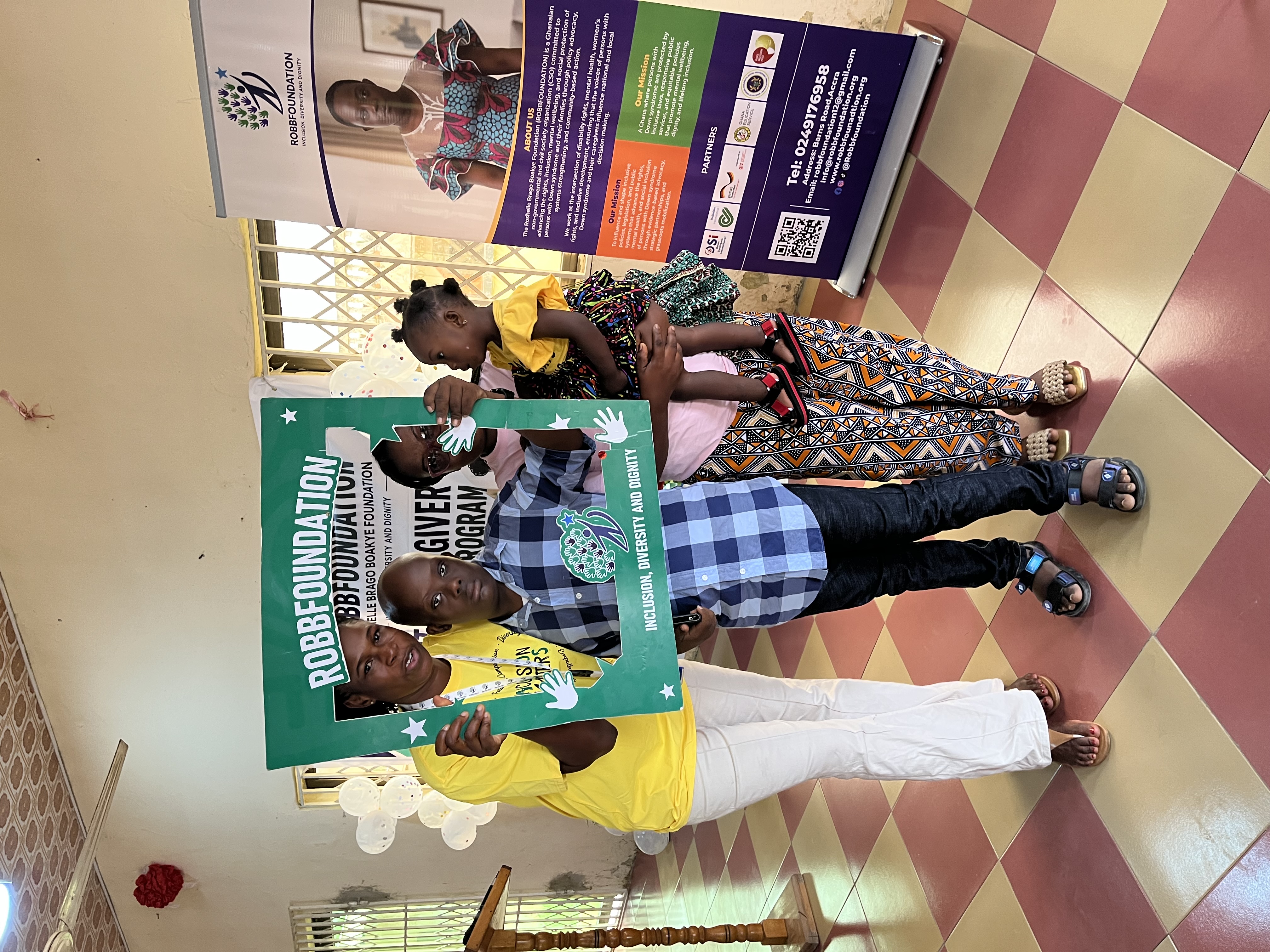
From Care to Empowerment: Why Community-Based Rehabilitation Matters
By Roshelle Brago Boakye Foundation (ROBBFOUNDATION)
For many families raising a child with a disability, the journey begins with a simple question:
“What can we do to help our child?”
But too often, the answer they receive is centered only on care.
Care is important. But people with disabilities need more than care.
They need opportunities.
They need access to education, healthcare, rehabilitation, employment, social participation and the chance to make decisions about their own lives.
This is where Community-Based Rehabilitation (CBR) becomes so important.
Beyond the Traditional Idea of Rehabilitation
Rehabilitation is sometimes understood as something that happens inside a hospital, clinic or specialized institution.
But disability does not exist only inside hospitals.
It exists in homes, schools, workplaces, churches, markets, sports fields and communities.
A child with an intellectual disability does not live at the rehabilitation centre. They live with their family and participate—or should be able to participate—in their community.
Community-Based Rehabilitation brings support closer to where people actually live.
It recognizes that rehabilitation is not only about improving a person’s physical or functional abilities. It is also about removing the barriers that prevent people with disabilities from participating fully in society.
From “What Is Wrong?” to “What Is Possible?”
One of the most important changes CBR brings is a change in perspective.
Instead of asking only:
“What is the person’s disability?”
we begin asking:
“What barriers are preventing this person from living the life they want?”
A child may have difficulty communicating, but perhaps the bigger barrier is that teachers have not received appropriate support.
A young person may have an intellectual disability, but perhaps the bigger barrier is that there are no opportunities for vocational training or employment.
A family may struggle to access therapy, but perhaps transportation costs and the distance to services are the real obstacles.
Community-based rehabilitation helps us look at the whole picture.
The Family Is Part of the Rehabilitation Journey
Families are central to successful community-based rehabilitation.
Parents and caregivers often become the strongest advocates for their children, but they can also experience exhaustion, financial pressure, isolation and uncertainty.
They may not know where to find services.
They may struggle to understand their child’s rights.
They may face stigma from relatives, neighbours or even institutions.
Supporting the individual therefore also means supporting the family.
Families need information, counselling, skills, peer support, referral pathways and opportunities to participate in decisions affecting their loved ones.
When families are empowered, they become partners in development rather than passive recipients of services.
Community-Based Rehabilitation Creates Inclusion
A rehabilitation programme should not only help a person become more independent.
It should also help society become more inclusive.
Consider a child with a disability who receives therapy but cannot attend school because the school environment is inaccessible.
Or a young person who receives vocational training but cannot find employment because employers believe they are incapable.
Or an athlete who has the ability to compete but cannot participate because there is no inclusive sports programme in their community.
In each case, the individual’s ability is only part of the story.
The environment matters.
CBR therefore requires communities to change as well.
The Five Areas of Empowerment
Community-based rehabilitation can support people with disabilities across different areas of life.
1. Health
People with disabilities should have access to appropriate healthcare, rehabilitation, therapy, assistive devices and health information.
2. Education
Children with disabilities should have meaningful opportunities to learn, develop their abilities and participate in inclusive education.
3. Livelihoods
Young people and adults with disabilities should have access to skills development, entrepreneurship, vocational training and employment opportunities.
4. Social Participation
People with disabilities should be able to participate in family, cultural, religious, recreational and community activities.
5. Empowerment
People with disabilities should have a voice in decisions affecting their lives.
They should not simply be spoken about.
They should be listened to.
Why Community-Based Approaches Matter in Ghana
In Ghana, many families still experience significant barriers when trying to access disability-related services.
For families outside major urban centres, accessing specialized services can be particularly difficult.
Transportation costs, limited services, lack of information, stigma and financial constraints can all prevent people from receiving the support they need.
A community-based approach can help bridge this gap by taking services and information closer to families.
It can also strengthen referral systems by connecting families with health professionals, educators, social workers, disability organizations, community leaders and other service providers.
This creates something more sustainable than isolated interventions.
It creates a community support system.
CBR Is Not About Doing Everything for People
Empowerment means moving away from dependency.
The goal should not be to create a system where people with disabilities constantly have to wait for someone to help them.
The goal is to create opportunities for people to develop skills, make choices, advocate for themselves and participate in their communities.
For a child, empowerment may mean learning to communicate their needs.
For a teenager, it may mean developing vocational skills.
For an adult, it may mean earning an income.
For a parent, it may mean having the confidence and knowledge to advocate for their child’s education.
For a community, it may mean learning that disability is not a reason for exclusion.
The Role of ROBBFOUNDATION
At the Roshelle Brago Boakye Foundation (ROBBFOUNDATION), we believe that inclusion must begin where people live.
Our community-based rehabilitation approach seeks to connect individuals and families with the support, information, referrals and opportunities they need to participate meaningfully in society.
We believe rehabilitation should not end when a person leaves a hospital or therapy room.
It should continue at home.
It should continue at school.
It should continue in the community.
It should continue on the sports field.
It should continue in the workplace.
And most importantly, it should continue throughout the person’s life.
From Care to Possibility
There is nothing wrong with caring for someone.
But if our idea of disability begins and ends with care, we risk overlooking the person’s potential.
A child with a disability is not only someone who needs support.
They are also a learner.
A friend.
An athlete.
A future worker.
A leader.
A citizen.
A person with dreams.
Community-Based Rehabilitation helps us move from asking:
“How can we care for this person?”
to asking:
“How can we create the conditions for this person to thrive?”
That is the shift from care to empowerment.
And that shift matters.
Because inclusion is not simply about helping people with disabilities survive.
It is about creating communities where they can belong, participate, contribute and thrive.
Join Us in Building Inclusive Communities
ROBBFOUNDATION invites families, professionals, community leaders, businesses, government institutions, development partners and disability organizations to work together to strengthen community-based rehabilitation and inclusion in Ghana.
Together, we can move from care to empowerment—and from exclusion to belonging.
Roshelle Brago Boakye Foundation (ROBBFOUNDATION)
Advancing Disability Rights. Building Inclusive Communities.
🌐 www.robbfoundation.org